Twenty-Fifth Sunday in Ordinary Time/A
Massimo Palombella
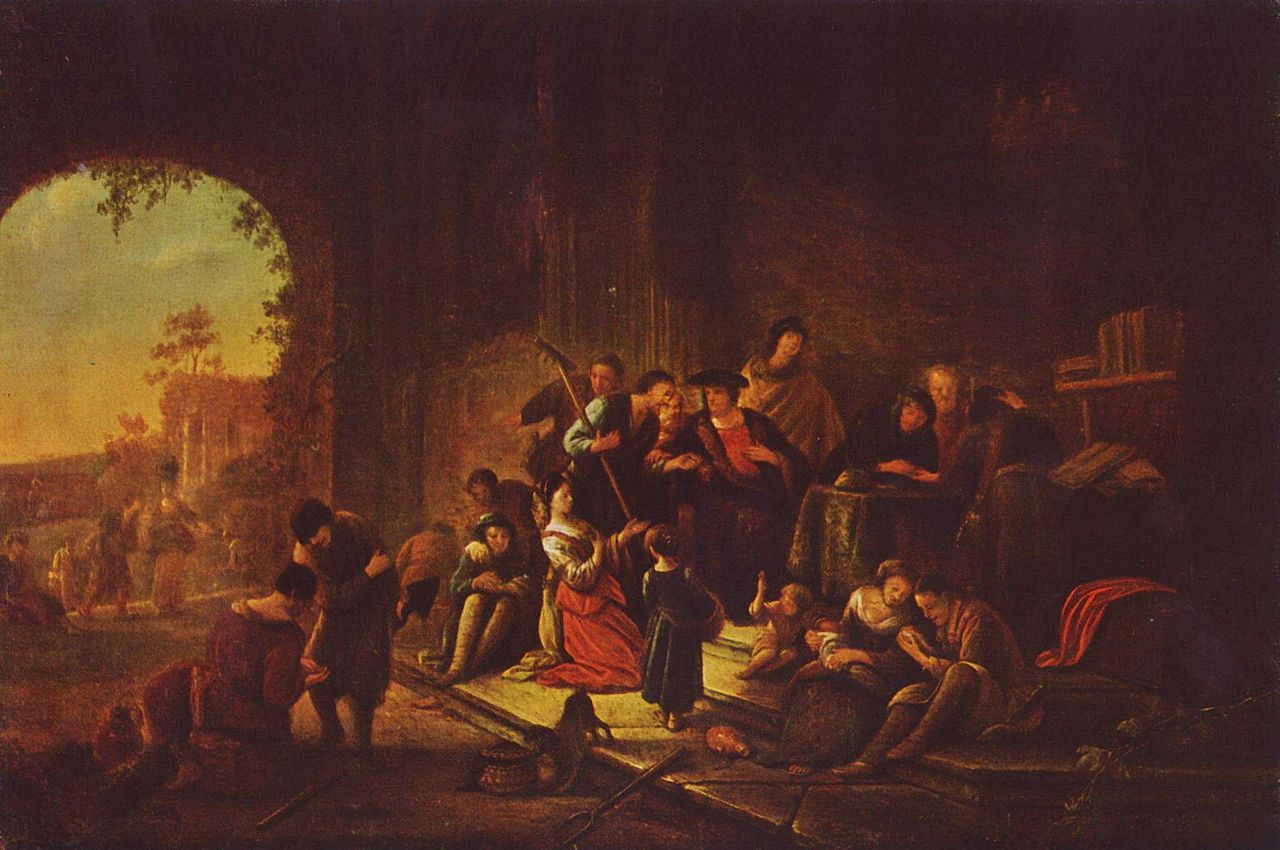
(Museum of Fine Arts, Budapest)
In today’s Gospel (Mt 20:1–16), Jesus, wishing once again to describe the “kingdom of heaven”, tells the parable of the labourers in the vineyard. The Greek word for vineyard is ἀμπελών (ampelṓn): the place to which the landowner calls, at different hours of the day, men who are waiting for the opportunity to work.
I believe that “working in the vineyard” may signify a life that has found its proper place: a life in which the essential things have been understood and in which, within a healthy process of growth, they gradually seek to take concrete form.
It is the Lord who calls us to “work in the vineyard”; yet “working in the vineyard” also corresponds to a deep and healthy human need: the need to feel that one’s existence has a place, a direction, a meaning.
In this simple and rather striking parable, Jesus touches with great delicacy upon one of the unresolved mysteries of our lives: the fact that some people are able to find their place in life quickly and well, whereas others require much more time.
From this perspective, the reply of the last labourers is particularly significant. When the landowner asks them, “Why have you been standing here idle all day?”, they answer: ὅτι οὐδεὶς ἡμᾶς ἐμισθώσατο (hóti oudeìs hēmâs emisthṓsato), “because no one has hired us”.
They do not say that they were unwilling to work. They say: “no one has hired us”.
I believe that here the Gospel touches something very deep in our human experience. In our personal lives we carry burdens, “slownesses”, difficulties that we neither chose nor deserved, but which we simply found ourselves having to bear. There are inner conditions, personal histories, wounds and circumstances that can make the journey towards a life truly set in its proper place considerably longer and more arduous.
Others, by contrast, without having chosen it or particularly deserved it, find themselves on smoother paths, with fewer obstacles and a greater ease in understanding, early on, where and how to place their lives.
We do not know why this happens.
We do know, however, that the Lord continues to go out into the marketplace. He goes out in the morning, at midday, in the afternoon, and even “about the eleventh hour”. He continues, in other words, to seek out the human person and to say: ὑπάγετε καὶ ὑμεῖς εἰς τὸν ἀμπελῶνα (hypágete kaì hymeîs eis tòn ampelôna), “you too, go into the vineyard”.
The possibility of a life that has found its proper place, of “life in abundance”, therefore remains open. Even when we feel that we have arrived late; even when a considerable part of our day seems already to have passed; even when we look at others and it seems to us that they began long before we did.
It certainly remains a mystery why some labour from the morning onwards, while others begin only at five in the afternoon. Yet alongside this mystery there remains the certainty that the Lord does not measure the value of our lives simply by the amount of time we have spent in the vineyard.
At the end of the parable, the landowner says: ὅτι ἐγὼ ἀγαθός εἰμι (hóti egṑ agathós eimi), “because I am good”.
Perhaps this is precisely the decisive point.
Our hope does not lie in having arrived early, in having enjoyed a more straightforward path, or in being able to display a greater number of hours worked. It lies in the fact that the One who calls us is “good”: he looks into the heart, he knows our story, he sees what has slowed our journey, and he understands the deep need that each of us carries within to find, at last, our own place in the vineyard.
And he does not leave that need unanswered.
The Gradual for today’s celebration is taken from Psalm 144 (Ps 144:18, 21), with the following text:
Prope est Dominus omnibus invocantibus eum: omnibus qui invocant eum in veritate.
Laudem Domini loquetur os meum: et benedicat omnis caro nomen sanctum eius.
(The Lord is near to all who call upon him, to all who call upon him in truth.
My mouth shall proclaim the praise of the Lord, and let every living creature bless his holy name).
The accompanying music, in Gregorian chant, is taken from the Graduale Triplex, published at Solesmes in 1979. The performance is by the Schola Gregoriana Monacensis, under the direction of Johannes B. Göschl. The recording may be found on the CD Prope est Dominus. Advent im Gregorianischen Choral, released by EOS in 2026.
A blessed Sunday and heartfelt greetings.