Twenty-Sixth Sunday in Ordinary Time/A
Massimo Palombella
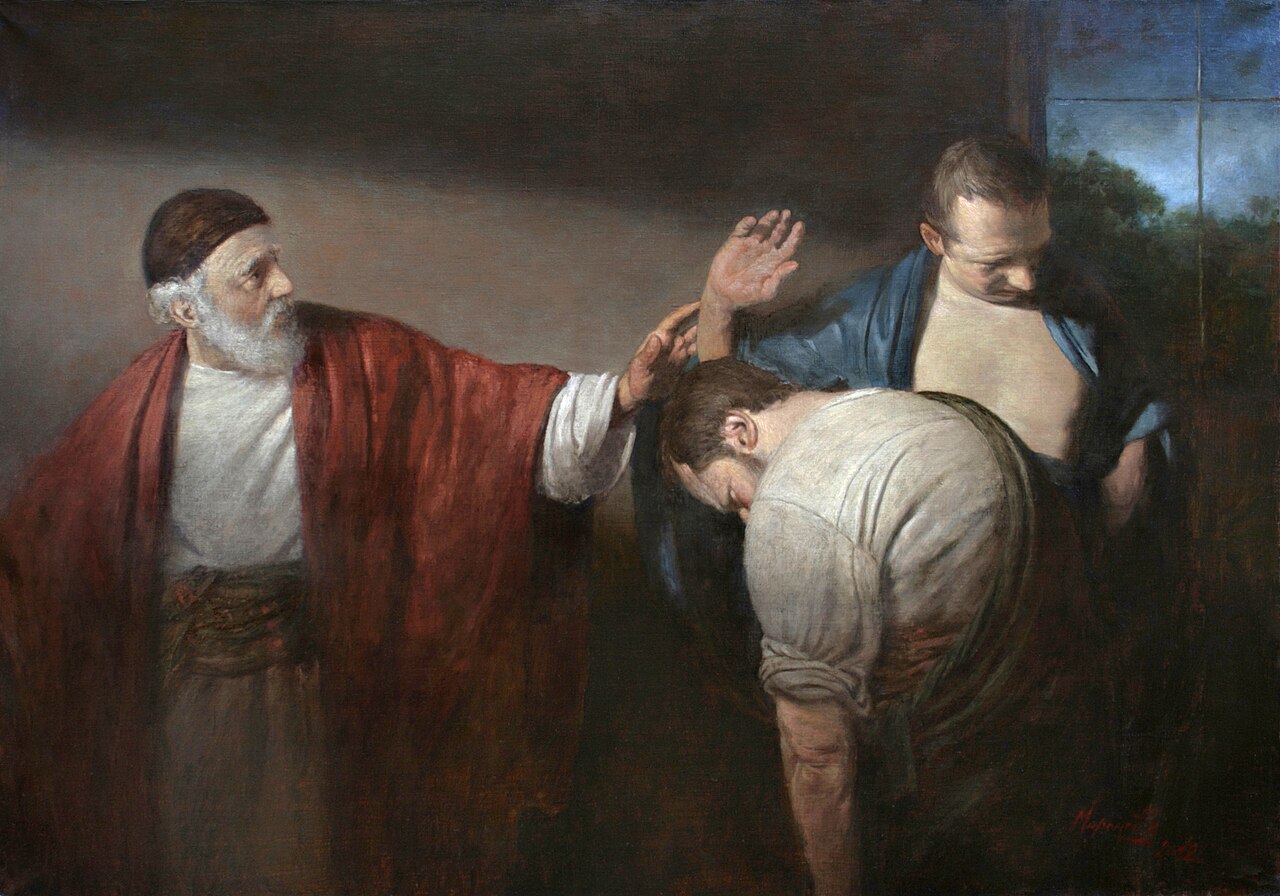
The first son replies to his father with striking honesty: Οὐ θέλω (ou thélō), ‘I do not want to.’ He has no desire to go and work in the vineyard. Yet the Gospel immediately adds: ὕστερον δὲ μεταμεληθεὶς ἀπῆλθεν (hýsteron dè metamelētheìs apêlthen), ‘but afterwards, having changed his mind, he went.’
This apparently insignificant detail sheds an interesting light upon the way we act and upon the choices we make in life. We often do many things without wanting to, without any particular enthusiasm, perhaps simply because we know that they need to be done. If we always waited until our motivation were perfect, there would probably be many things we would never do at all.
At a deeper level, if we are honest with ourselves, we realise that many of the choices we have made in life — even important ones — have arisen, and perhaps still arise, from rather poor motivations. We have devoted ourselves to others because we needed to feel fulfilled; we have cared for someone while expecting, perhaps unconsciously, something in return that might satisfy our own need to be loved; we have gained a qualification partly in order to prove, to ourselves or to others, that we were capable.
And yet the Lord does not wait for our motivations to become perfect before entering our lives. Jesus asks: τίς ἐκ τῶν δύο ἐποίησεν τὸ θέλημα τοῦ πατρός; (tís ek tôn dýo epoíēsen tò thélēma toû patrós?), ‘Which of the two did the will of the father?’ The point is not that our intentions must be perfect from the outset, but that we allow ourselves gradually to be led from our ‘I do not want to’ towards a concrete act, from what we initially feel towards what, in the end, we choose to live.
Paradoxically, the Lord makes himself present precisely within our poor motivations, within those things we are quick to judge as somehow improper, immature, or unworthy of the image we would like to have of ourselves. He meets us there and, from that very place, sets us on our way.
It is a journey of maturation, growth and healthy purification, along which our motivations themselves slowly change, deepen and are renewed. In concrete terms: I may marry for a particular reason, but I remain married only by allowing that reason to mature, deepen and be purified. The same is true of every important, genuinely ‘existential’ choice in our lives.
Perhaps this is one of the most beautiful aspects of today’s Gospel: God does not begin to love us only when we have finally become mature, transparent and consistent. He begins where we are. With our Οὐ θέλω, our ‘I do not want to’; with our resistance, our weaknesses, even with those motivations of which we sometimes feel ashamed.
And it is precisely there that the Lord can accomplish great things: through our reluctance, through our fragility, through our disarming poverty. For very often, that of which I am ashamed is precisely the place where the Lord is waiting for me: to love me in the way I need to be loved, to take me by the hand, and to lead me, slowly, towards that ‘life in abundance’ which, left to myself, I would not even know how to imagine.
The Introit for today’s celebration is taken from the second chapter of the Letter of Saint Paul the Apostle to the Philippians (Phil 2:10, 8, 11), with the following text:
In nomine Domini omne genu flectatur, caelestium, terrestrium et infernorum:
quia Dominus factus obediens usque ad mortem, mortem autem crucis:
ideo Dominus Iesus Christusin gloria est Dei Patris.
(At the name of the Lord every knee shall bow, of those in heaven, on earth, and under the earth;
for the Lord became obedient unto death, even death upon a cross.
Therefore the Lord Jesus Christ is in the glory of God the Father).
The accompanying music, in Gregorian chant, is taken from the Graduale Triplex, published at Solesmes in 1979. The recording may be found on YouTube; however, no information is provided there concerning the performance or the performers.
A blessed Sunday and heartfelt greetings.