Sixteenth Sunday in Ordinary Time/A
Massimo Palombella
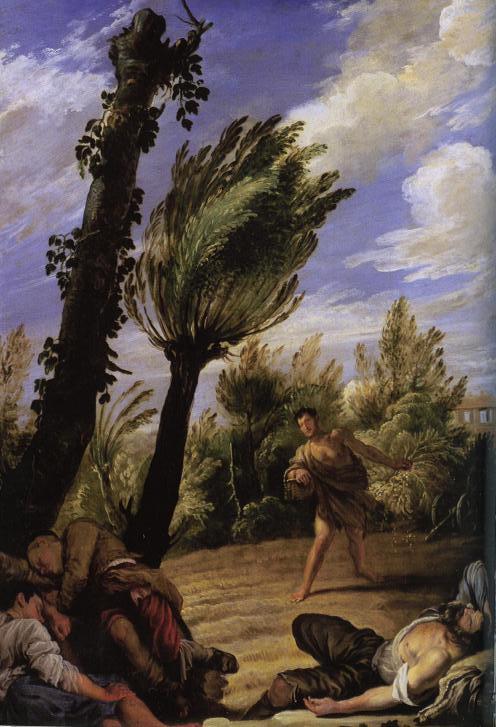
In today’s Gospel (Matthew 13:24–43), Jesus tells a number of parables, among them that of the good seed and the weeds.
Our first instinct when confronted with weeds is straightforward: remove them. The servants think likewise. Having identified the problem, they immediately seek a remedy.
The master, however, gives a most unexpected reply: “Let both grow together until the harvest”.
This is not an invitation to resignation, but an entirely different way of looking at reality.
We are accustomed to thinking of time as a succession of isolated moments, each of which must produce a tangible result. God, by contrast, does not look at the passing moment; He looks towards fulfilment.
For this reason, in the Gospel, time is not what delays the solution. It is the very horizon within which reality slowly reveals what it truly is.
We, however, remain captivated by appearances, and it is precisely here that our misunderstanding begins.
We imagine that we know a person because we have witnessed a particular behaviour. We believe we understand a situation because we have experienced only one moment of it. We even imagine that we know ourselves because we judge ourselves through the prism of our limitations.
Yet no person is ever fully defined by the present moment, by a mistake, or by personal frailty.
The Gospel invites us to dwell within a reality far greater than the one we ordinarily perceive—a reality in which time is not merely the passing of days, but the possibility for everything to become fully what it is meant to be. Ourselves included.
Perhaps the greatest challenge is not to accept God’s time, but to accept that God looks upon us very differently from the way we look upon ourselves.
We see only what is still lacking; the Lord sees what is already coming to birth. We long to be loved according to our own expectations; God loves us according to the truth of our lives.
That is why His love does not merely remove what troubles us; rather, it brings to light what we are called to become.
In so many circumstances, perhaps we should cease asking, “Why does God wait?”
The truer question may well be this: “Am I willing to look at reality, at others, and at myself in a different way?”
The Gradual appointed for today’s celebration is taken fromPsalm 8 (Ps 8:2) and proclaims:
Domine, Dominus noster, quam admirabile est nomen tuum in universa terra!
Quoniam elevata est magnificentia tua super caelos.
(O Lord, our Lord, how wonderful is your name in all the earth!
For your majesty is exalted above the heavens).
The musical setting reproduced here is taken from the Graduale Triplex, published by the Abbey of Solesmes in 1979. The accompanying interpretation is performed by the Cantori Gregoriani, under the direction of Fulvio Rampi.
A blessed Sunday and heartfelt greetings.