First Sunday of Lent/A
Massimo Palombella
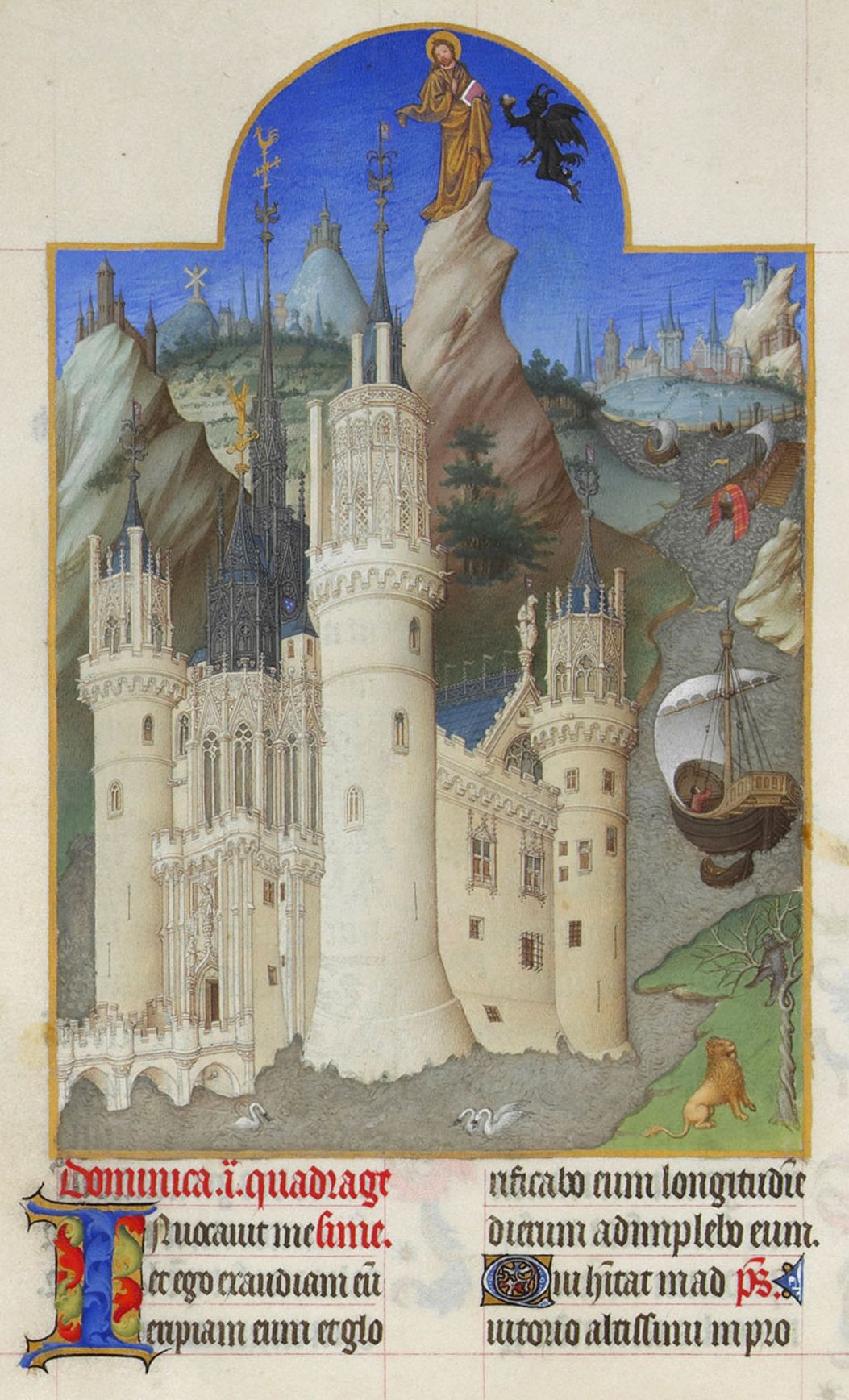
In today’s Gospel (Mt 4:1-11) Jesus is led by the Spirit into the wilderness to be tempted by the devil.
Like Jesus, each of us is tempted, and temptation is a situation into which we are led in order to know ourselves and mature in our personal relationship with the true God.
True temptation insinuates itself into our unresolved issues, destabilises us, clouds our capacity for ‘reality’, orders true things in a false way to move us towards decisions that do not tell the truth about us.
Facing temptation means learning to be with our unresolved issues, with what hurts us. And there is a time to flee from this temptation and, consequently, from all situations that lead us to it (not being able to do anything else), and a time to stop fleeing and start maturing.
Verses 15 and 16 of Psalm 90 constitute the text of the Introit for today’s celebration, the first Sunday of Lent in the Roman Rite:
Invocabit me et ego exaudiam eum:
eripiam eum, et glorificabo eum:
longitudine dierum adimplebo eum.
When he calls to me, I will answer him;
I will rescue him and honour him;
with long life w ill I satisfy him.
It is interesting to note the Gregorian melody on the accent of the verb “glorifi-ca-bo” (I will glorify him).
This melodic-rhythmic movement, although only a few notes long, actually signals an explicit reference to the canticles of the Easter Vigil, where the same formula will resound several times, giving the definitive sign of the Easter context.
Thus, the introit that, in the Roman Rite, inaugurates the Sundays of Lent is configured, in this central point, as an allusive moment of great power, in which the announcement of Easter is already contained.
It is also significant that the text used here is taken from the second part of Psalm 90, where God himself speaks in the first person: “He shall call upon me, and I will answer him; I will deliver him, and I will glorify him.” And it is precisely on this last verb—the true expressive peak of the introit—that the use of the aforementioned “Easter formula” also brings the melody to its climax.
The promise of Easter is already present at the beginning of the Lenten journey and it is no coincidence that it resounds, as in the first Advent introit (“Ad te levavi”), in the eighth mode, the last of the Gregorian modes, which is also a sign of a promise of final fulfillment.
The attached music is taken from the Graduale Novum published in Regensburg in 2011.
The live performance is by the Schola Cantorum Venerandae Fabricae, at the concert “Psallite Deo sapienter. A journey from Gregorian chant to Antonio Vivaldi” held in the Feriale Chapel of Milan Cathedral on February 17, 2026.
A blessed Sunday and heartfelt greetings.

entire concert: