Solemnity of the Most Holy Body and Blood of Christ/A
Massimo Palombella
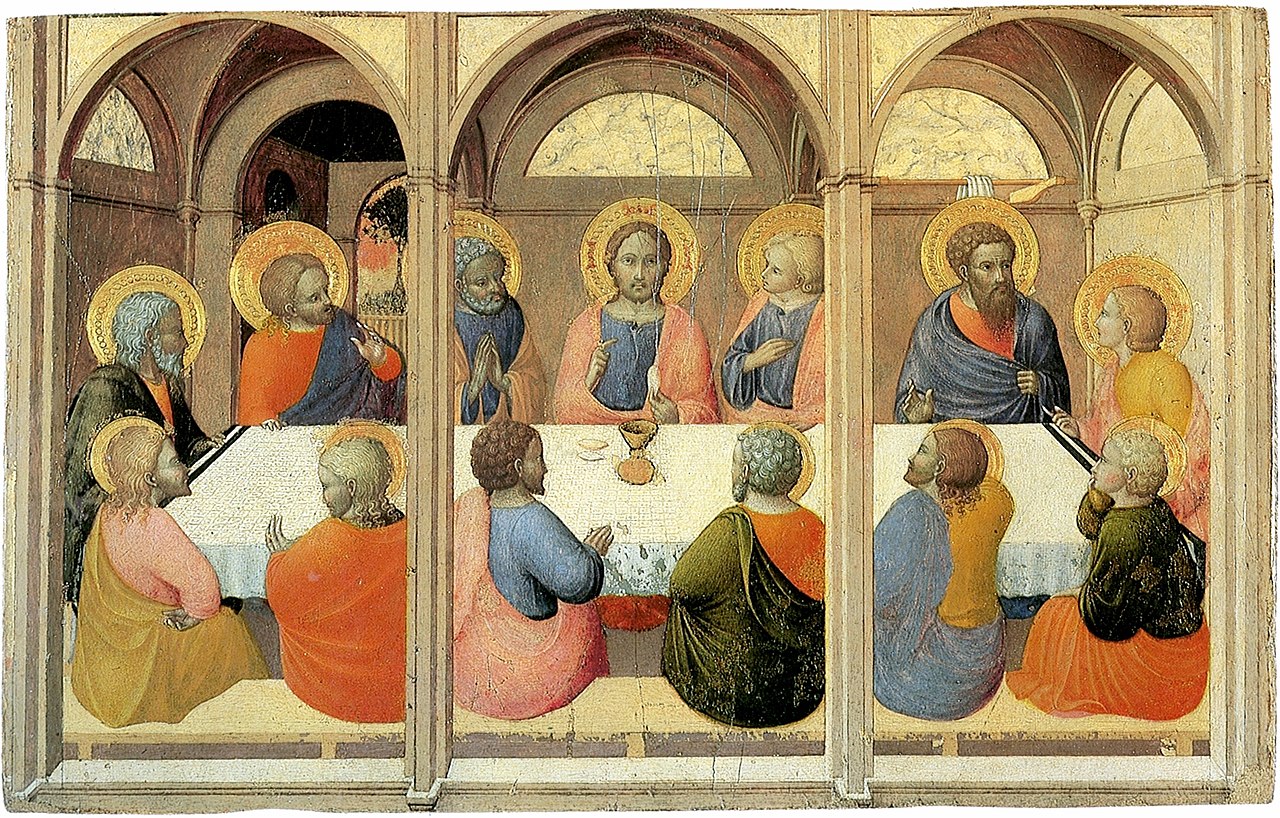
The Solemnity of the Most Holy Body and Blood of the Lord sets before us the very heart of the Christian faith: a God who did not will to remain distant from our human condition, but who continues to give Himself to us under the humble and fragile signs of bread and wine. Herein lies the Christian paradox: the Lord of glory consents to be present in that which is small, vulnerable, and subject to time and consumption. Just as His mortal flesh was the place of encounter between God and humanity, so now His real presence is mediated through the sacramental signs. Saint Leo the Great expresses this with remarkable profundity: “What was visible in our Redeemer has passed over into the sacraments” (Sermon 74, 2).
For this reason, the Eucharist is not merely the remembrance of a past event, but a tangible companionship along the pilgrimage of our earthly life. Amid its burdens, uncertainties, and wounds, Christ remains with us and becomes our nourishment. In a world marked by fragility and instability, the Eucharist safeguards a promise: that our history is not abandoned to chance; that human frailty does not have the final word; and that death cannot extinguish the longing for the fullness of life which dwells within the human heart.
Whenever we approach the Body of the Lord, we receive far more than spiritual consolation: we receive the pledge of our eternal destiny. In that bread, broken and shared, there is already foreshadowed what we are called to become. The Eucharist lifts our gaze beyond the limits of the present age and directs us towards the final fulfilment, when God shall be “all in all” (1 Cor. 15:28), when our corruptible nature shall be clothed with incorruptibility (cf. 1 Cor. 15:52–53), and when we shall behold the Lord “face to face” (1 Cor. 13:12), “as He is” (1 Jn 3:2).
The Solemnity of the Most Holy Body and Blood of the Lord invites us not merely to adore the Lord’s Real Presence, but to recognise that our lives are already inhabited by this Presence, which sustains us, accompanies us, and leads us towards its fullness. Within that fragment of consecrated bread is contained the whole of Christian hope: God draws near to each one of us so that our lives, taken up into His own, may be opened beyond the boundaries of frailty and death, towards that definitive communion in which every longing shall find its fulfilment.
The antiphon appointed for the Magnificat at Second Vespers today bears a text traditionally attributed to Saint Thomas Aquinas:
O sacrum convivium, in quo Christus sumitur:
recolitur memoria passionis eius, mens impletur gratia et futurae gloriae nobis pignus datur
O sacred banquet, in which Christ is received:
the memory of His Passion is renewed; the soul is filled with grace; and there is bestowed upon us the pledge of the glory to come.
The accompanying musical setting is by Luca Marenzio (1553–1599) and is taken from his Motecta festorum totius anni, published in Rome in 1585 (Luca Marenzio, Motecta festorum totius anni [Rome: Apud Alexandrum Gardanum, 1585]). The present live performance is given by the Schola Cantorum of the Veneranda Fabbrica del Duomo di Milano during the concert “In hoc anni circulo: The Motets for the Feasts of the Whole Liturgical Year by Luca Marenzio”, held at the Church of San Gottardo in Corte (Royal Palace, Milan) on 22 January 2026.
A blessed Sunday and heartfelt greetings.