Solemnity of the Resurrection of the Lord
Massimo Palombella
ὃ γὰρ οὐ προσέληπται, οὐδὲ ἰάται·
ὃ δὲ ἥνωται τῷ Θεῷ, τοῦτο καὶ σώζεται
Quod enim non est assumptum, non est sanatum;
quod autem unitum est Deo, hoc etiam salvatur
That which has not been taken up is not healed either;
but that which is united with God is also saved (Gregory of Nazianzus, Epistle 101, to Cledonium, 32)
Easter is the fulfilment of Christmas, the ultimate seal of the Incarnation.
God became flesh to enter into our unresolved struggles, into our suffering; into that which we cannot make sense of, into that which seems meaningless and weighs so heavily upon us.
In his human story, in his suffering, in his death on the cross, we are present: there is every fragment of our existence, every gratuitous and undeserved injustice, everything that dwells within us and makes no sense. There is everything that is the fruit of that profound, constitutive disharmony which Christian tradition calls sin.
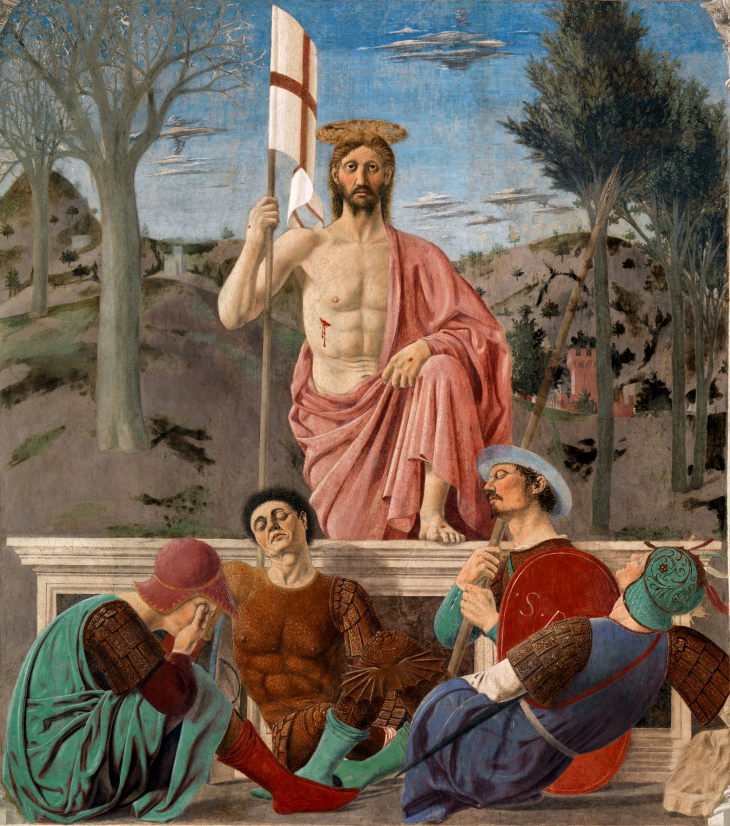
The Resurrection does not erase the Cross — the wounds remain in Christ’s body — but brings it to fulfilment, transfigures it.
Easter is the great resolution of our poor materiality.
Pain, meaninglessness, failure, gratuitous injustice, falling and being unable to get back up… Everything is transfigured into the delicate flavour, the refined ‘sound’ of eternity.
And Easter, at a certain point in life — as adults, as conscious and responsible men and women, beyond any education received — becomes a choice: a profound and personal decision that necessarily includes the cross.
In the first book of four-part motets by Giovanni Pierluigi da Palestrina, published in Venice in 1564 by Antonio Gardano, for Easter Day, “In Resurrectione Domini”, the Princeps Musicae includes the motet “Iesus iunxit se discipulis suis in via”, the text of which is now taken from the antiphon to the Magnificat for the Second Sunday of Easter.
Iesus iunxit se discipulis suis in via et ibat cum illis.
Oculi eorum tenebantur ne eum agnoscerent.
Et increpavit eos dicens:
‘O stulti et tardi corde ad credendum in his quae locuti sunt prophetae’. Alleluia.
Jesus drew near to his disciples on the road and walked with them.
Their eyes were kept from recognising him.
And he rebuked them, saying:
‘O foolish ones, and slow of heart to believe in what the prophets have spoken!’ Alleluia.
The live performance is by the Schola Canturum Venerandae Fabricae at the concert in the Church of San Gottardo (Milan) on 23 October 2025.
Happy Easter from the bottom of my heart.