Solemnity of the Most Holy Body and Blood of Christ/C
Massimo Palombella
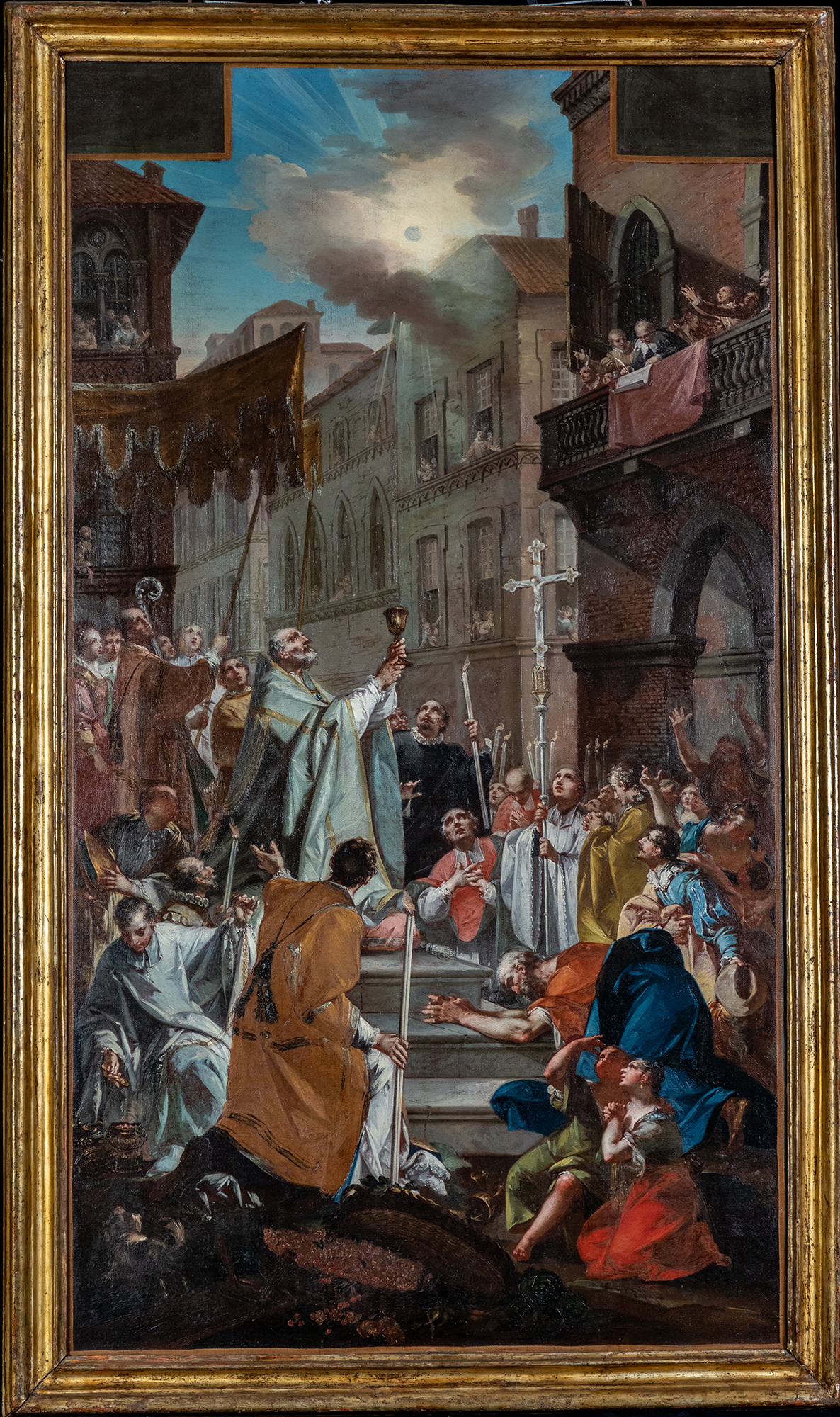
Today’s feast originated in 1246 in Belgium, precisely in the Diocese of Liège, in reaction to the heresy of Berengar of Tours (998-1088), a heresy that denied transubstantiation by asserting that Christ’s presence in the Eucharist was not real, but only symbolic. On August 11, 1264, in Orvieto, Pope Urban IV with the bulla “Transiturus de hoc mundo” (When he was about to pass from this world) extended the Solemnity to the whole Church (the previous year there was the Eucharistic Miracle of Bolsena) asking Thomas Aquinas (1225-1274) – at that time resident in Orvieto – to write the texts of the Liturgy of the Hours and Mass. It is interesting to note that the construction of the beautiful Duomo of Orvieto (started in 1290 by Pope Nicholas IV to give a worthy place to the Corporal of the Miracle of Bolsena) has its origin precisely in the institution of this Solemnity.
The Eucharist – “source and apex of all Christian life” (Lumen Gentium 11) – is intimately connected with what essentially identifies Christianity with respect to any other religious experience, that is God made man, the Incarnation (cf. Leo XIII, Mirae Caritatis, encyclical letter [May 28, 1904]). There is no other religious experience where we can meet God through historical signs (water, wine, bread, oil…). Signs that are “fragile” because they are vulnerable, subject to usury, aging… The same condition in which the Son of God made man found himself. It is throught the fragility, in the uncertainty and precariousness of our living in history, that in the Eucharist we are given a “pledge”, a guarantee of our future glory, of what our life will be forever, where God will be “all in all” (1 Cor 15:28), where we will be transformed and our corruptible body will be made incorruptible (cf. 1 Cor 15:52-53), where we will see God “face to face” (1 Cor 13:12), “as he is”. (1 John 3:2).
The verse of the Alleluia of today’s Celebration is taken from chapter VI of the Gospel of John (Jn 6:55.57) with the following text:
Alleluia. Caro mea vere est cibus, et sanguis meus vere est potus:
qui manducat meam carnem et bibit meum sanguinem, in me manet et ego in eo.
(Alleluia. My flesh is the true food, my blood is the true drink;
he who eats my flesh and drinks my blood abides in me, and I in him).
The attached music, in Gregorian Chant, is taken from the Graduale Triplex published in Solesmes in 1979. The interpretation is by the “Choeur des moines de l’abbaye Notre Dame de Fontgombault”.
A blessed Sunday and heartfelt greetings.