Thirty-Two Sunday of Ordinary Time/A
Massimo Palombella
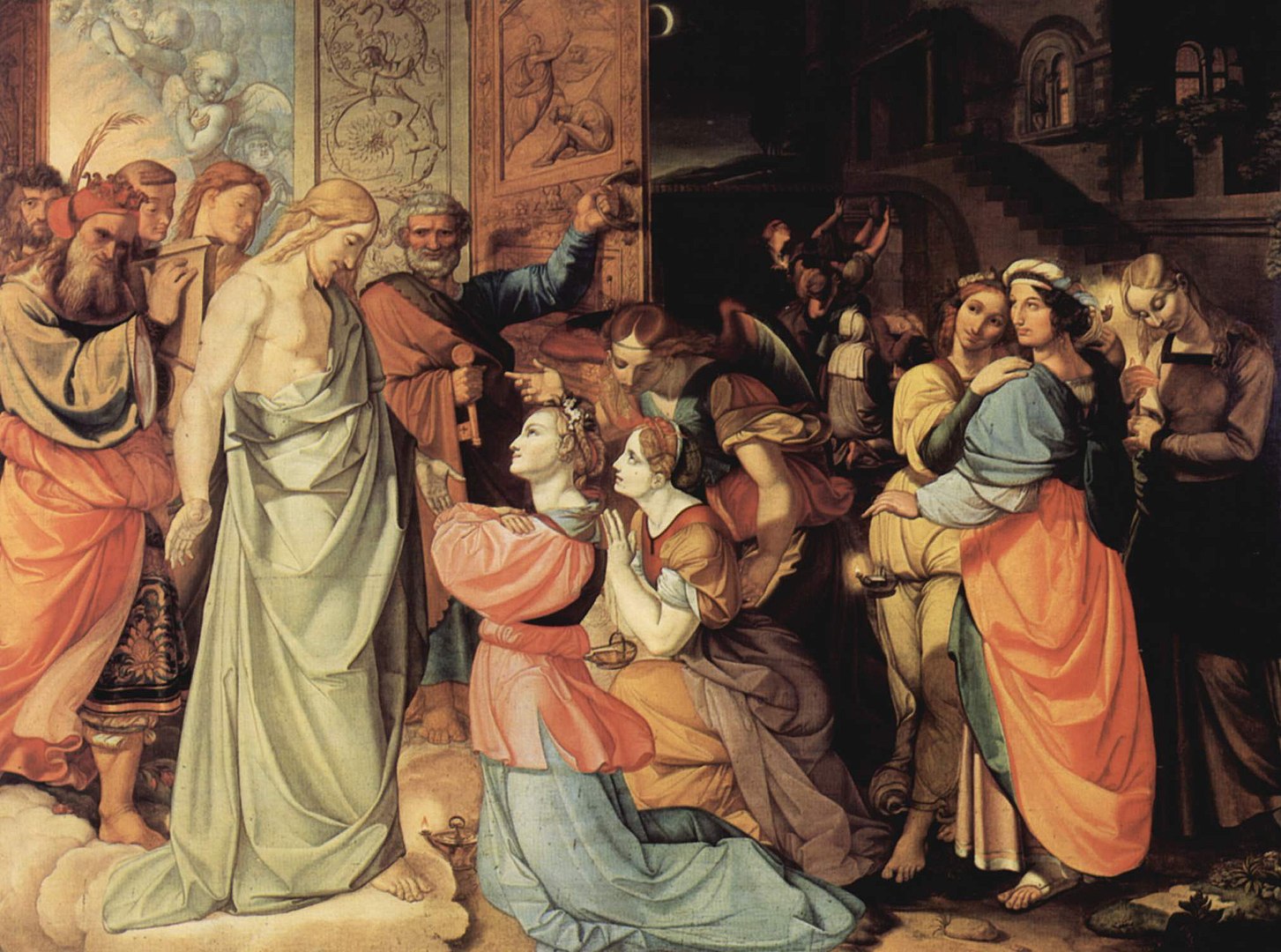
In today’s Gospel (Mt 25:1-13) Jesus, through the parable of the virgins, again defines the “kingdom of heaven”. Interestingly, the fulfilment of our longing, the “life in abundance”, full happiness, the “kingdom of heaven” is compared to a wedding feast. In fact, the wedding day represents the culmination of a whole set of things: a falling in love that defines itself in a life project, our being sexualised, the great power of sexuality that finds its way to define itself in fatherhood and motherhood, the fulfilment of ‘separations’ that must take place in order to be adult persons and to be able to truly ‘bond’. In all this process there is something profound, and perhaps not fully perceptible, namely the intelligence of life, the capacity – even if not conscious – to ‘abstract’. Those who allow themselves to be challenged by the ‘kingdom of heaven’, by the ‘life in abundance’ by the bet that life in fullness is possible, initiate a process of ‘intelligence’ of life, a dynamic that allows us to realise in advance that our ‘oil’ is running out, that our children need a real future, that our wife, our husband need to be cared for and looked after. In essence, we become capable of no longer living by the day, but of planning, of ‘abstracting’, of being like the ‘wise’ virgins mentioned in the Gospel.
This process is not easy and is not without temptations and falls. But ‘falling’, no longer ‘having the desire’, losing the ‘taste for life’, however painful, is placed and resolved within a life project, within a love that remains, despite our falls, our infidelities. The Lord, at every age of life, continues to challenge us, to ask us to be courageous, to leave our certainties behind. He asks us not to give up our ‘intelligence’ of life. He waits for us when we struggle, takes us by the hand when we can no longer walk, continues to tell us the truth even when we no longer want to hear it. He loves us as we need to be loved to make us the men, the women we can and should be.
The Offertory antiphon for today’s celebration is taken from Psalm 118 (Ps 118:133) with the following text:
“Gressus meos dirige secundum eloquium tuum:
ut non dominetur mei omnis iniustitia, Domine.”
Guide my footsteps, O Lord, according to your word,
so that no iniquity may ever gain the upper hand, O Lord”.
The attached music, in Gregorian Chant, is taken from the Gradual Triplex published in Solesmes in 1979. The music track can be found on YouTube where there is no indication of interpretation.
A blessed Sunday and heartfelt greetings.