Solemnity of the Immaculate Conception
Massimo Palombella
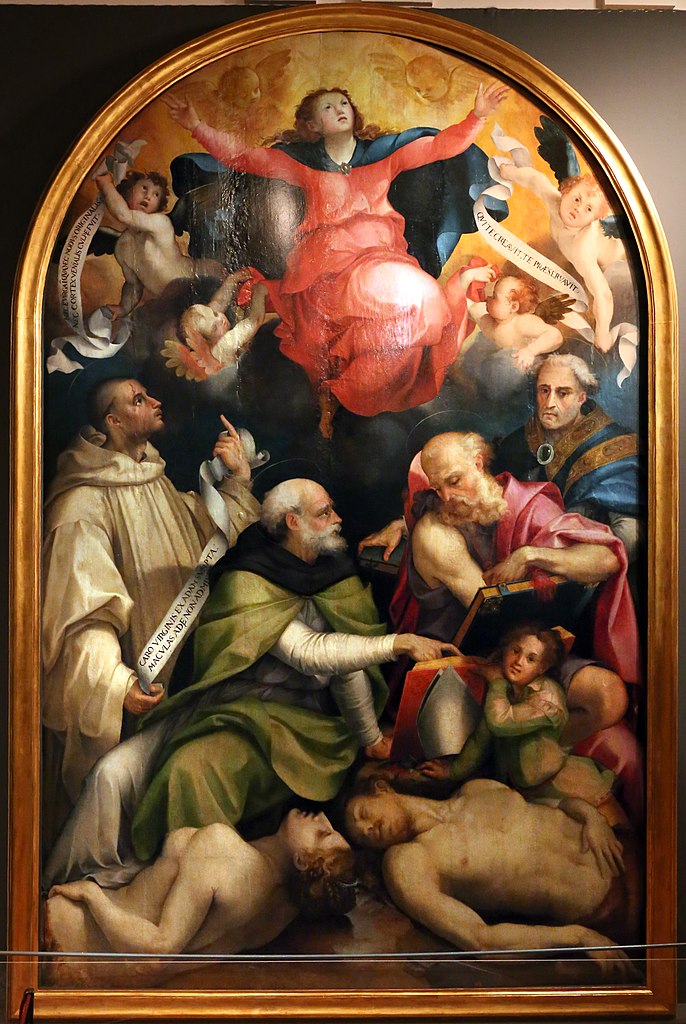
The Immaculate Conception of the Blessed Virgin Mary is a Dogma of faith proclaimed by Pope Pius IX on 8 December 1854 with the Bull “Innefabilis Deus”, according to which the Virgin Mary was preserved immune from original sin from the first moment of her conception.
The origin of the feast in the West can be traced back to the Celtic Church of Ireland. In fact the Martyrology of Tallaght (early 9th century) and the Calendar of Oengus (about 825) presents a feast of the Conception of Mary on 3rd May.
The feast spread in England (present in various calendars, among which Old Minster, Winchester, New Minster, dated about 1030) and France (in 1154 the prior of St. Peter of Regula, in the Diocese of Bazas, introducing it in his abbey, declared that almost all France celebrated it).
Various 12th and 13th century sacramentaries attest to the presence of the feast in Italy. Pope Sixtus IV officially introduced the liturgical feast in Rome and Pope Clement XI in 1708 made this feast universal.
On 8 December 1857 Pope Pius IX inaugurated and blessed the monument of the Immaculate in Rome in Piazza di Spagna. Pope Pius XII, on the day of the Immaculate Conception, began to send flowers as a tribute to the Virgin. Pope John XXIII, in 1958, left the Vatican and went personally to Piazza di Spagna to lay a basket of white roses at the feet of the Virgin Mary, and later visited the basilica of Santa Maria Maggiore, and this custom was continued by successive Popes.
The readings of today’s Eucharistic Celebration (Gen 3:9-15.20, “The mother of all those who live”; Ps 97, “Sing a new song to the Lord, for he has worked wonders”; Eph 1:3-6.11-12, “Before the word was made, God chose us in Christ”; Lk 1:26-38, “I am the handmaid of the Lord”) give a historical-salvific setting to this feast. In fact, Mary Immaculate is for each one of us a reason for hope because she shows us a clear direction of history towards the triumph of grace over sin, of life over death, of truth over lie…
A story is traced, a story of salvation, of “life in abundance” that can take shape in my existence through my collaboration, my trust, my “leaving the nets”. We must then accept the challenge to walk, to follow Him who alone can lead us to the truth, to the meaning, to the true fulfilment of our every desire.
The Offertory antiphon for today’s celebration is taken from the first chapter of Luke’s Gospel (Lk 1:28) with the following text:
Ave Maria, gratia plena: Dominus tecum:
benedicta tu in mulieribus, alleluia.
(Hail Mary, full of grace, the Lord is with thee;
blessed art thou amongst women, alleluia).
The attached music, in Gregorian chant, is taken from the Graduale Triplex published in Solesmes in 1979. The interpretation is by the ‘Cappella Gregoriana’. The musical score can be found on the CD ‘Chant: Gregorian Christmas Meditation’ published by Cobra Entertainment LLC in 2014.
A blessed feast and heartfelt greetings.