Fourteenth Sunday in Ordinary Time/A
Massimo Palombella
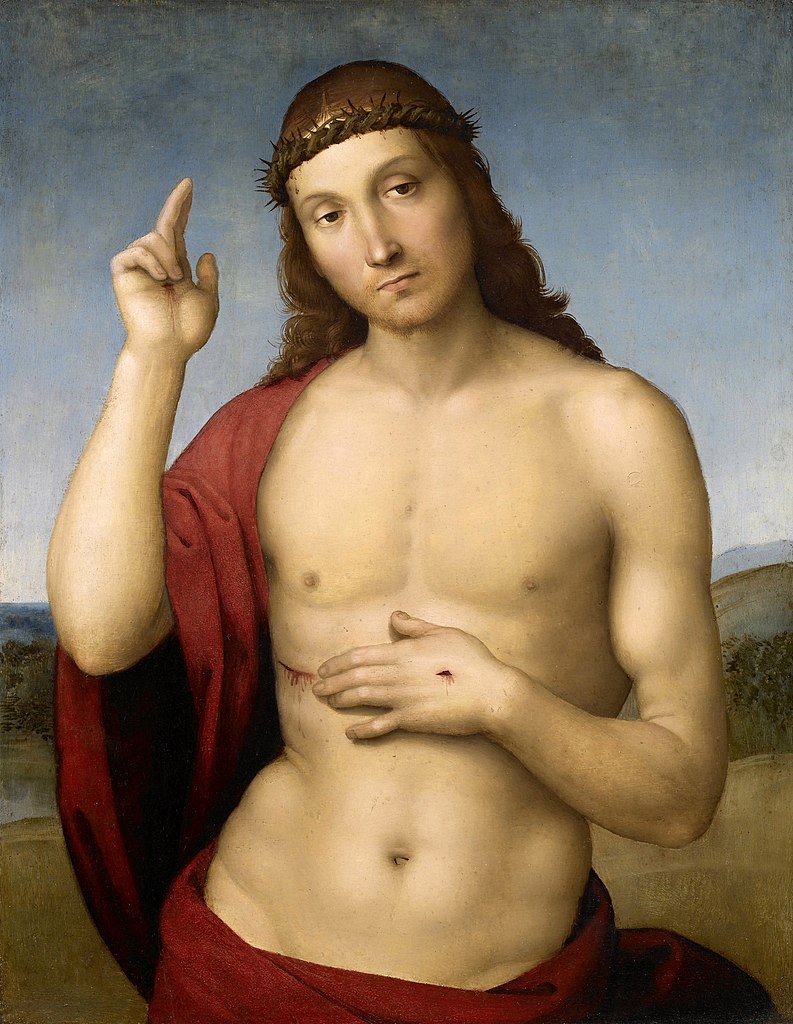
In this Sunday’s Gospel (Matthew 11:25–30), Jesus utters one of the most profoundly human sayings in the whole of the New Testament: “Come to me, all you who labour and are burdened, and I will give you rest.”
The way He begins is particularly striking. The Greek verb is Δεῦτε (deûte). It is an imperative, yet it carries none of the tone of a command. Rather, it is an invitation, almost a summons spoken from close at hand. We might translate it as: “Come now, come here to me.”
This is always how the Lord makes Himself present in our lives: not through obligation, but through an encounter.
Jesus addresses those who are weary. The Evangelist employs the verb κοπιάω (kopiáō), describing those who have been worn down by toil. Not merely those who work hard, but those who feel they have spent so much of themselves that they can scarcely find themselves again.
He then speaks of those who are burdened, those who carry heavy loads upon their shoulders. The verb is φορτίζω (phortízō): it evokes the image of someone who continues walking beneath a weight that can no longer be laid aside. Some burdens are not of our choosing; others we have fashioned for ourselves. Some arise from life’s circumstances; others dwell deep within our hearts. Yet, sooner or later, every one of us comes to know the weariness of living.
It is precisely to such people that Jesus speaks: to each one of us.
He does not promise a life free from hardship. He promises something far deeper. The verb translated as “I will give you rest” is ἀναπαύω (anapaúō). It means rediscovering the place where life can breathe once more, where we may truly find repose without ceasing to journey.
The Lord does not remove us from our humanity, with all its weariness and its wounds. Rather, He comes to meet us precisely there. And when we realise that we no longer have to make our way through life alone, even though the burden itself may remain unchanged, it is no longer borne in the same way.
True rest does not arise from the absence of toil, but from the presence of One who walks beside us, sustains us when our strength begins to fail, keeps us from losing sight of our destination and, often without our even realising it, leads us towards that “life in all its fullness” (John 10:10) which He came to bestow upon us.
The text of today’s Gregorian Alleluia is taken from Chapter 11 of the Gospel according to Saint Matthew (Matthew 11:28), with the following text: “Alleluia. Venite ad me, omnes qui laborátis et oneráti estis: et ego refíciam vos” (“Alleluia. Come to me, all you who labour and are burdened, and I will give you rest.”)
The accompanying chant is taken from the Graduale Triplex, published at Solesmes in 1979.
The performance is by the Choir of King’s College, Cambridge, conducted by Stephen Cleobury. The recording may be found on the CD Ikos: Sacred Works of Górecki, Tavener, Pärt, released by Warner Classics in 1994.
A blessed Sunday and heartfelt greetings.