Solemnity of Mary Most Holy Mother of God
Massimo Palombella
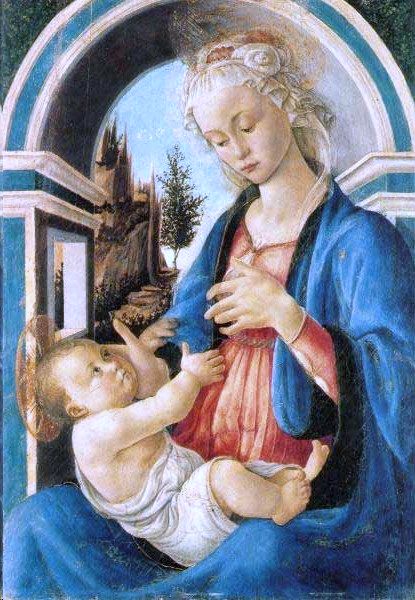
Today’s feast is closely connected with the title of “Theotokos” given to Mary by the Council of Ephesus in 431. Since the 4th century the liturgy has celebrated a memorial with the title of Mary Mother of God and various Eastern rites still celebrate it around Christmas. From the 8th century onwards, the “Natale Sanctae Mariae” (Christmas of St Mary) was celebrated in Rome, of which today’s solemnity preserves the rich Marian content of the liturgical texts (prayers, antiphons and responsories). In 1931 Pope Pius XI included this feast in the Roman Calendar to commemorate the Council of Ephesus by setting the feast on 11th October. The liturgical reform of the Second Vatican Council transferred this feast to the last day of the Octave of Christmas with the degree of solemnity.
To celebrate Mary ‘Mother of God’ is to place oneself at the origin of all Marian dogmas throughout history and to immerse oneself, once again, in what characterizes Christianity compared to every other religion, namely the Incarnation, God made man. In fact, all the discussions of the Council of Ephesus underlie the Church’s concern to safeguard and affirm that Jesus is totally man and totally God, beyond any Platonic or Aristotelian understanding of reality.
All of our humanity has been assumed by God because truly everything has been saved. There is no longer anything of our humanity that needs to be removed, eliminated or forgotten in order to live fully. Pain, suffering, defeat, abandonment, death, but also love, passion, desire… everything is destined for light, for meaning, for resurrection, precisely because everything has been assumed by God.
It is only in this perspective that we can understand why Mary can be solemnly called “Mother of God”, of a God who has taken on the whole of human events, including growing up in a woman’s womb, being born, maturing in the understanding of self with human rhythms and in a family.
This God is the Christian God who, if truly encountered existentially in our lives, slowly leads each one of us to reality, to the necessary self-understanding, to a healthy concreteness, not to run away from history, to recognize and encounter him in each person, to do our work professionally, not to run away from problems, not to confuse truth, justice and mercy with a sterile “goodness” aimed only at perversely staying calm.
In essence, encountering the Christian God means understanding that the same God and the truth about myself await me only and only in history, in reality, precisely because here – and only here – God has revealed himself.
In the tradition of the Church, the Missa Cum iubilo (IX) is sung at Marian solemnities.
The attached music, the Gloria from the Missa Beata Mariae Virginis II, is by Giovanni Pierluigi da Palestrina and comes from the Mantovan Masses (Manuscript of Santa Barbara, 1587), offering an alternation between Gregorian chant (Missa Cum iubilo) and the polyphony of the Princeps Musicae. The interpretation is by the Pontifical Musical Chapel at the Papal celebration on 6 January 2018.
A blessed Feast, happy 2026 and heartfelt greetings.